
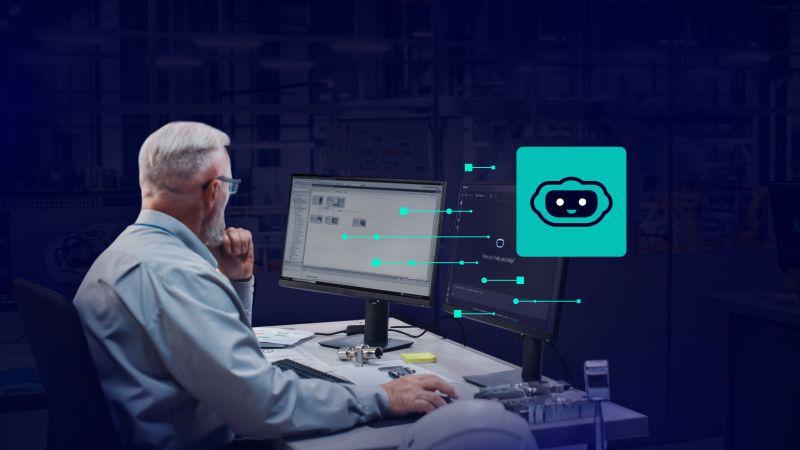
Connected directly to Siemens’ TIA Portal, Eigen Engineering Agent is designed to carry out repetitive automation tasks while keeping engineers focused on higher-value decisions.
Industrial AI represents a once-in-a-generation shift, with the potential to reshape industry as much as electricity once did. Locally, that change is already a competitiveness issue, with the New Zealand Government backing manufacturers to adopt automation, AI, robotics and cloud technologies.
As this new industrial era takes shape, Siemens is celebrating 150 years of innovation in New Zealand, from early electrification through to today’s digital and automation technologies. The company is marking the milestone with its Beyond 150 competition as it looks to the technologies that will define what comes next.
The next chapter
At iSPEC 2026 held in Auckland in September, Siemens presented a technology built around a familiar manufacturing challenge: engineering teams being asked to deliver increasingly complex automation projects in less time.
Yet much of an automation engineer’s day can still be consumed by repetitive work. Manual coding, device configuration, visualisation, testing and documentation are all essential, but leave less time for design decisions, optimisation and problem-solving. Meanwhile, experienced engineers are becoming increasingly hard to find.
Siemens’ Eigen Engineering Agent is designed to change that balance.
From instruction to execution
Eigen is a generative AI-powered engineering assistant that works directly with Siemens’ TIA Portal. This connection gives it access to the context of an actual automation project, including its data structures, components and relationships.
Engineers can describe a goal using natural language and provide supporting documents such as technical specifications, programming style guides or applicable standards. Eigen can then develop a plan, use the appropriate engineering tools, assess its own output and refine the work before returning it for review.
It's this project awareness that gives Eigen its practical edge. While generic AI tools can produce code or advice that still needs to be interpreted and adapted, Eigen works within the engineer’s existing environment and follows the standards established for the project.
Its capabilities span much of the automation workflow. Eigen can assist with hardware and network configuration, generate and test PLC code, develop HMI screens, configure drives and produce project documentation. It can also explain unfamiliar code, support fault analysis and help engineers understand the structure of complex or inherited projects.
Siemens says this can deliver efficiency gains of up to 50% across automation engineering tasks. The aim is to reduce repetitive effort while improving consistency and giving engineers more time to concentrate on higher-value work.
Siemens also emphasises data control: conversations are stored locally on the user’s machine, while PLC code, project files and prompts are not used to improve the AI or shared with others.
Proof in practice
Early customer applications demonstrate how those capabilities translate into practical outcomes.
Engineers at US automation specialist Prism Systems used Eigen to generate SCL code and create reusable logic blocks. From an initial prompt through to modifications, it produced a fully documented function block and added it to the PLC project in less than a minute, compared with approximately 20 minutes for manual development.
For Italian systems integrator Techcab, the challenge was an older-generation control system. The company needed to interpret legacy S5 PLC code and rewrite it in SCL, but personnel with the necessary S5 expertise were unavailable. Eigen helped engineers understand and translate the code, with the tested migration completed in weeks rather than the months anticipated for a manual process.
Keeping engineers in control
These examples demonstrate an evolution in engineering workflow in which people define the required outcome and oversee the system, while AI carries out more of the repetitive, time-consuming busywork.
As Prism Systems Vice President of Engineering Ron Knight observed during the pilot, developers “will remain essential”. Their expertise, he said, is still required to frame effective instructions and ensure the design and functionality of the overall process.
For manufacturers and automation specialists facing the same pressures around skills, speed and complexity, that may be Eigen’s key promise: helping existing engineering knowledge go further, while keeping critical decisions in experienced hands.
Learn more about Eigen Engineering Agent here.
To enter Siemens’ Beyond 150 competition, click the below:
https://www.siemens.com/en-us/company/history-heritage/new-zealand-150-years/?stc=aucg200083