Cocaine and methamphetamine use continues to climb across New Zealand workplaces. The latest Imperans Report, a quarterly analysis of workplace drug use from The Drug Detection Agency (TDDA), carries a warning for employers ahead of the festive season.
In Q3 2026, 3.2% of all screens1 conducted by TDDA indicated the presence of drugs, returning the nation’s businesses to an upward trend, compared with 2.8% in Q2.
Among all positive results across New Zealand, year-on-year (YoY) substance detections are as follows.
- Cocaine: 3.2% of positive tests, up 117.7% YoY
- ATS (including methamphetamine): 25.4% of positive tests, up 9.4% YoY
- THC (Cannabis): 68.9% of positive tests, down 3% YoY
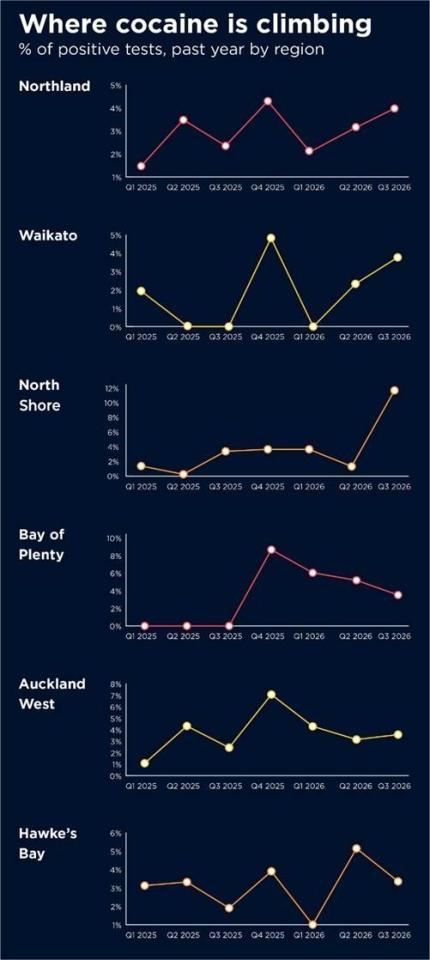
Cocaine accounted for 3.2% of positive tests in Q3 2026, up 117.7% YoY. It is the highest level seen in a year outside of seasonal holiday peaks, and Auckland’s North Shore is establishing itself as a hotbed of activity. "This quarter, our Imperans data points to a concerning shift in cocaine. We warned businesses in the South Island in particular last quarter, and now it's expanding to the North Island. Detections suggest that organised crime has found a suitable supply chain and they continue to identify markets, like Auckland’s North Shore, where the drug can be sold effectively. This is following global supply trends," says Glenn Dobson, Chief Executive of TDDA.
ATS, including methamphetamine, accounted for 25.4% of positive tests, up 9.4% YoY. This may look like an easing from last quarter (32.7%), but that reflects a high base in Q2. Setting that spike aside, ATS has held an upward trend over the past several quarters. Businesses in Wellington and Otago should particularly take note, as positive rates keep climbing.
Cannabis and opioids detection rates remain stubbornly high. Cannabis accounted for 68.9% of positive tests, down 3% YoY, although the quarterly trend turned back upward, up 7% quarter-on-quarter (QoQ). Opioids accounted for 18.2% of positive tests, down 2.2% YoY.
While cannabis positive rates eased YoY in many regions, most have turned upward again this quarter. Some regions rose sharply QoQ, such as Otago, up 33.2% QoQ, and Taranaki, up 110% QoQ.
What this means for employers
"Ahead of the holiday season, I'd recommend going through your health and safety checklist, and ensure it includes a comprehensive drug and alcohol policy and action plan for the worst that could happen. The Health and Safety at Work Act 2015 puts the obligation on employers to manage foreseeable risks. With the right system in place to handle a situation, you can maintain a healthy and productive workforce, even through the silly season," says Dobson.
TDDA recommends reviewing the types of testing businesses use and the frequency of testing, such as in a random drug testing programme.
Education now helps supervisors and managers to recognise the behavioural signs of substance use and act on reasonable grounds – a skill needed as the nation moves towards the holidays. Employees need to know how drugs and alcohol affect safety, and why that matters. Testing is the foundation of the system and education is what makes that system work in an organisation.