
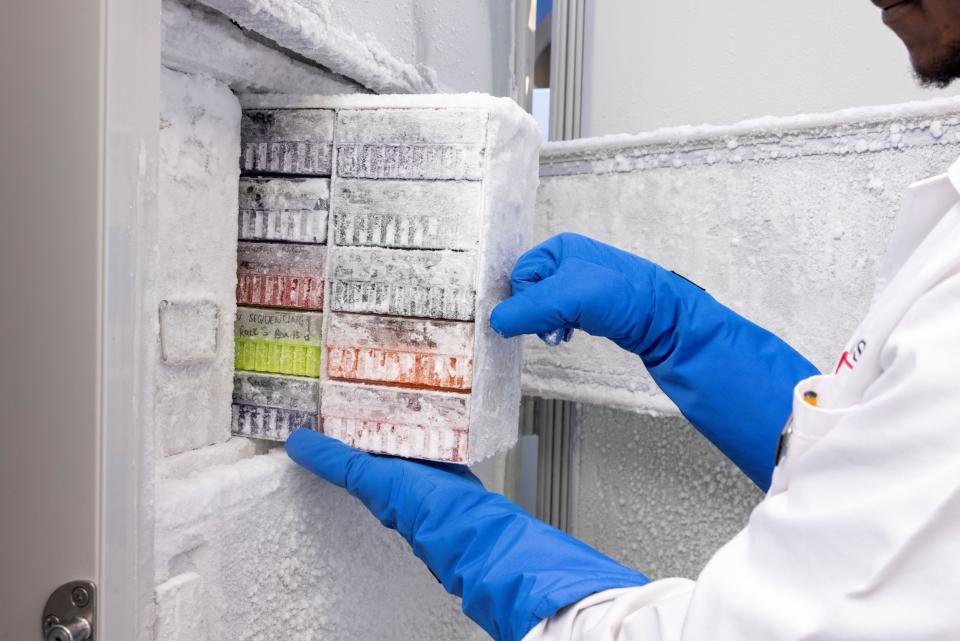
Remote temperature monitoring specialist Omniflex has helped South African clinical research organisation CAPRISA protect temperature-sensitive biological specimens with a continuous environmental monitoring system, helping maintain required storage conditions, respond to potential problems and support Good Clinical Laboratory Practice (GCLP), audit readiness and laboratory efficiency.
CAPRISA manages biological specimens across -80°C freezers, liquid nitrogen storage, refrigerators, incubators and ambient environments. Its large-scale clinical research studies require robust environmental monitoring to maintain the integrity, traceability and security of specimens. If storage conditions move outside defined parameters, rapid notification can give laboratory personnel the opportunity to investigate and act before samples are compromised.
“One of the biggest risks with relying on periodic manual checks is that a problem can occur between reading. If a freezer develops a fault overnight, for example, it could be several hours before anyone discovers that the temperature has moved outside the required range,” explained Ian Loudon, international marketing & sales manager at Omniflex.
CAPRISA deployed Omniflex’s Continuous Temperature Monitoring System, powered by the Data2Desktop platform, across its main research laboratory, central biorepository and clinical research sites. The system provides real-time visibility, automated excursion alerts and continuous data logging across critical storage environments ranging from -80°C freezers to -196°C liquid nitrogen freezer storage.
If conditions move outside defined parameters, automated alerts enable personnel to respond without waiting for the next scheduled check. The continuous record also provides visibility of what happened before, during and after an excursion, helping laboratory teams investigate potential issues and demonstrate that required storage conditions have been maintained.
The system also removes the need for laboratory personnel to carry out routine manual readings. Data is captured automatically at the required level, while Data2Desktop automates reporting and provides centralised access to live dashboards and historical temperature records. This reduces the administrative burden on laboratory staff while providing the records needed for internal quality management and external regulatory inspections.
Continuous monitoring can also help identify emerging equipment problems. For example, a refrigerator compressor that begins to fail can enter a faster cycling pattern as it works harder to maintain temperature. Changes in this behaviour can indicate that a fault is developing, providing an opportunity to investigate before it affects storage conditions.
“The Omniflex system has proven to be a reliable and effective solution for continuous temperature monitoring,” explains Dr Natasha Samsunder, laboratory director at CAPRISA.
By combining continuous monitoring, automated alerts and historical data, the system has strengthened CAPRISA’s ability to protect biological specimens while supporting operational efficiency and audit readiness. The resulting records also support GCLP compliance by providing a traceable history of environmental conditions. Read the full case study via Omniflex’s website.