
In large-scale irrigation networks, reliable remote monitoring is essential to help operators manage water distribution across geographically dispersed and often challenging locations. To support the Don Irrigation Scheme in Tasmania, Cromarty, an Australian automation and electrical engineering specialist, worked with Ovarro, a specialist in remote telemetry systems. Together, they delivered a solution for remote outlet installations that required dependable flow and pressure monitoring as part of Tasmanian Irrigation’s SCADA system.
Cromarty has been solving industrial automation, measurement and control challenges for more than 35 years. With engineering expertise across complex operational environments, the company supports critical infrastructure projects where reliability, integration and long-term serviceability are essential. For irrigation schemes, this means helping connect remote field assets to the systems that operators use to monitor performance, monitor water delivery and respond to issues in the field.
The Don Irrigation Scheme is a major regional infrastructure project for north-west Tasmania, supplying high-reliability irrigation water to the Don, Forth, Barrington and Sheffield districts. The scheme delivers 4,750 megalitres of summer water and 4,750 megalitres of winter water, supporting irrigators across a 180-day summer season and a 180-day winter delivery period.
Drawing water from the Forth River catchment, the scheme uses three pump stations, balance tanks and 53 kilometres of distribution pipeline to deliver water to irrigators at a peak flow rate of 39.6 megalitres per day. This scale makes reliable monitoring essential, helping operators manage flow and pressure across remote outlet installations while maintaining dependable water delivery throughout the irrigation season.
By providing reliable access to water for irrigation, the project helps local agricultural businesses diversify, expand and increase crop rotations, making reliable telemetry a key part of the scheme’s long-term operation.
For local producers, dependable irrigation can influence planning decisions, crop choices and investment confidence. This made the supporting monitoring infrastructure particularly important, because the value of the scheme depends not only on delivering water.
For Cromarty, the project required a solution that could perform consistently across remote property outlet installations. Many of these sites are located away from mains power and fixed communications infrastructure, meaning the telemetry system needed to combine low power consumption, reliable cellular communications and robust field performance. The project therefore required more than a standard monitoring device. It needed a proven remote telemetry platform capable of supporting dependable data acquisition across a distributed irrigation network.
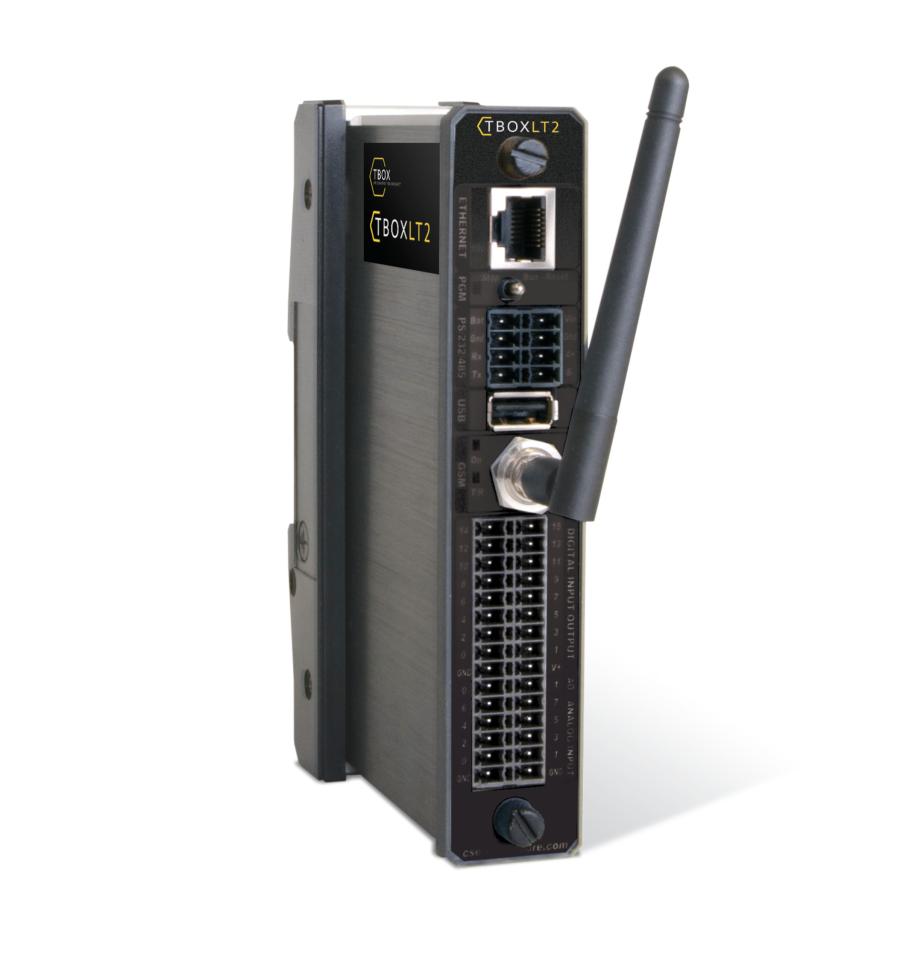
The scheme required a reliable, low-powered and solar-charged telemetry approach capable of communicating over cellular networks. Previous alternative telemetry technology had been trialled, but was found to be insufficiently robust for the remote signal strengths across the scheme. To address this, Cromarty worked with Ovarro to deploy a telemetry solution based around Ovarro’s TBox remote telemetry units (RTUs).
This made resilience a central requirement from the outset. The selected technology needed to handle the realities of remote communications, limited power availability and changing field conditions, while continuing to provide data to Tasmanian Irrigation’s central SCADA system.
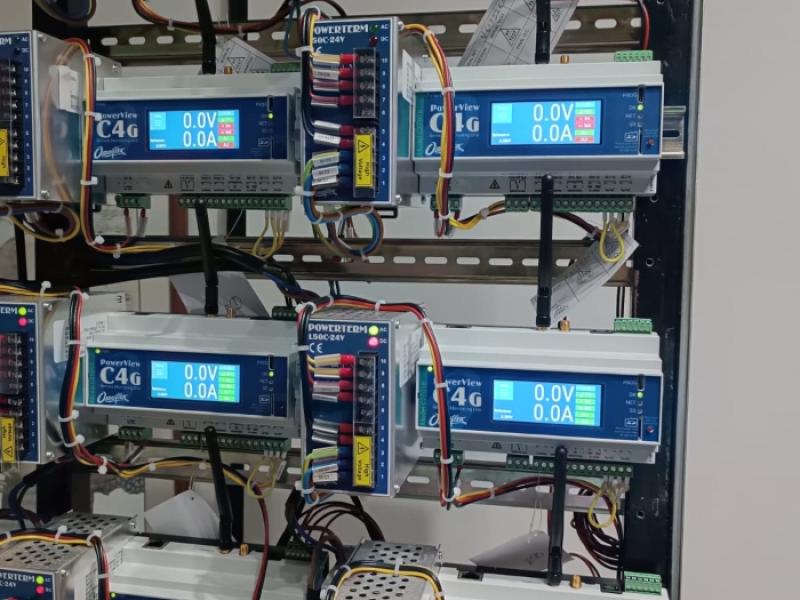
Ovarro’s TBox RTUs were selected for the project due to their compact form factor, all-in-one design, temperature rating, communication protocols and proven reliability. They also support physical I/O, DNP3 protocol capability and integration with the existing SCADA environment.
“The devices have to be robust. They have to be able to work in the environment and also needed to be practical for repeat deployment,” said Paul Stute, Product Sales Manager for RTUs at Ovarro. “They need to have the communications capability and the protocols required for this type of infrastructure.”
Cromarty also valued the availability of remote and local technical support. During integration, early technical challenges were resolved with support from Ovarro’s technical team, while suitability testing was carried out before final decisions were made with the client. This support included assistance around the communications set-up, including virtual private network configuration and the allocation of IP addresses to the RTUs through the telecommunications provider.
Cromarty also developed and tested code off site, creating a template that could be rolled out across multiple installations. This helped ensure that the selected approach could be tested, refined and confidently rolled out before being deployed across remote property outlet installations.
Supporting remote irrigation assets
The TBox RTUs provide monitoring for property outlet installations across the Don Irrigation Scheme. These assets enable Tasmanian Irrigation to monitor farmers’ water allocation usage through flow and pressure data, requiring field devices that can support reliable communications and data acquisition in remote environments.
By enabling remote visibility of flow and pressure data, the telemetry system supports more effective management of irrigation assets and helps operators identify issues without relying solely on site visits. While no quantified reduction in site visits has been confirmed, the system gives operators better visibility of remote assets and reduces the need to depend on manual checks alone. This is particularly important for farmers, because the property outlets are the points where they access their water allocation.
“The TBox is well suited to remote site applications like this one,” said Michael Holmes, Manager Engineering and Asset Intelligence at Tasmanian Irrigation. “It is proven on our network, integrates cleanly with our SCADA and performs reliably in the conditions we deploy it into.”
The collaboration between Cromarty, Ovarro and Tasmanian Irrigation has resulted in a robust telemetry solution for remote irrigation monitoring. Since deployment, the system has performed reliably with minimal issues, supporting consistent data acquisition from remote field assets. Consistent data helps ensure that operators can maintain oversight of the network, while farmers benefit from infrastructure designed to support dependable water delivery.
“Ovarro’s support helped resolve the early integration challenges and gave us confidence in the suitability of the solution before deployment,” said Eric Goh, Automation Engineer at Cromarty. “The system has been reliable since deployment, with minimal issues.”
The success of the project has also helped establish a repeatable approach for future schemes. Following the Don Irrigation Scheme, Cromarty has been awarded further work involving additional TBox RTUs for the Northern Midlands Irrigation Scheme, demonstrating the value of a scalable telemetry architecture that can be replicated across wider irrigation networks.