
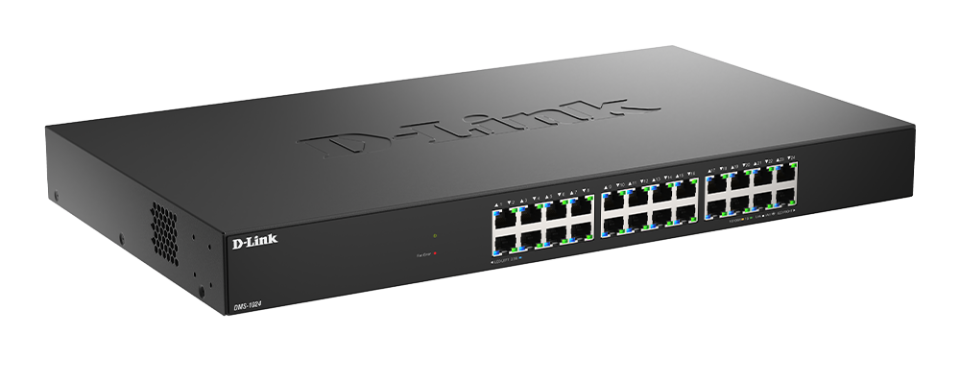
D-Link A/NZ has unveiled its new range of 2.5G Multi-Gigabit unmanaged switches, including the DMS-1016 and DMS-1024 models. Designed for seamless, ultra-fast connectivity, these switches cater to the growing bandwidth demands of both home and small business networks.
Modern digital workflows, including video conferencing, cloud computing, and real-time collaboration, demand faster, reliable networks. These new 2.5G switches address this by delivering ultra-fast downlink speeds across 16 or 24 ports, optimising productivity in device-dense environments.
“As digital workflows become more bandwidth-intensive, multi-gigabit performance is no longer optional—it’s essential,” said Graeme Reardon, Managing Director, D-Link A/NZ. “Our new 2.5G switches deliver next-generation performance with plug and play simplicity, futureproofing networks for years to come.”
DMS-1016 2.5G 16-Port Multi-Gigabit Unmanaged Switch
Product Features and Benefits
• 16 or 24-Port unmanaged delivering reliable 2.5-gigabit speeds
• Intelligent power management reduces energy use during idle periods, supporting sustainability goals while lowering operating costs
• Plug-and-play installation eliminates bottlenecks and powers high-end devices without complexity
Availability and pricing
The DMS-1016 and DMS-1024 switches are available now from www.dlink.com.au, www.dlink.co.nz and from all authorised D-Link partners and resellers for the following RRPs:
DMS-1016 - NZ$799.00
DMS-1024 - NZ$899.95