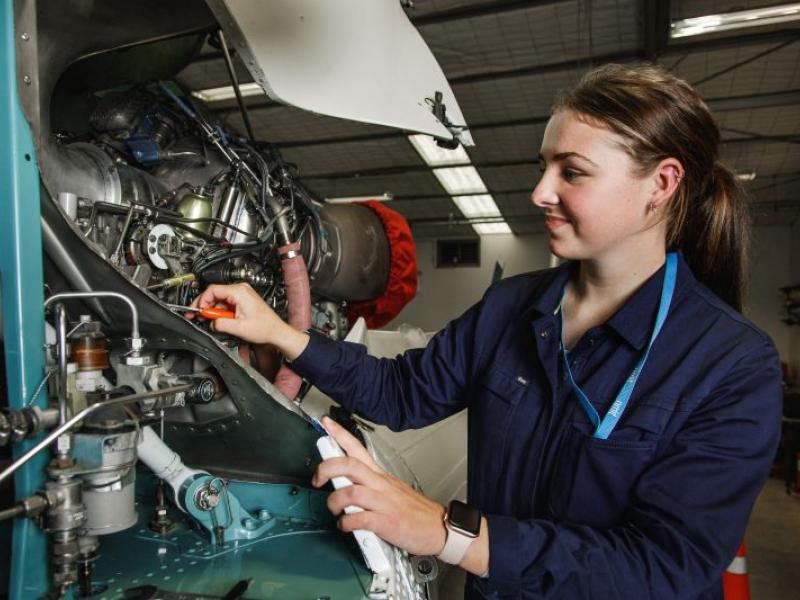


When Sean Martin talks about apprenticeship training, he speaks from lived experience - and that perspective is exactly why he’s such a strong advocate for getting it right.
Now Service Supervisor at Excel Refrigeration and Air Conditioning Palmerston North, Martin worked across five employers over 13 years on his journey to achieving his Level 4 refrigeration qualification. That breadth of experience gave him a clear view of what good apprenticeship support looks like, and what doesn't.
Today, he's using those lessons to help shape a stronger, more supportive experience for the next generation of apprentices.
"I learned what great employers do differently," Martin says, "and now I get to bring that into how we train our people."
Excel Refrigeration and Air Conditioning operates 12 regional branches and more than 300 staff nationwide, including 40 apprentices.
According to Excel Group Marketing Team Lead Amy McPhie, the company’s investment in training has remained consistent for years - even when the business was much smaller.
“Training has always been a priority for the group,” McPhie says.
One of the group’s programmes brings apprentices together from around New Zealand each year for its four-day Excel Group Apprentice Training event, combining practical learning, collaboration and industry mentoring.
Martin says this level of focused training and company support changed not only his career progression, but his passion for the industry itself.
“Working somewhere that genuinely invests in training changed how I see the industry. It showed me how vital quality training is, and how much difference great employers can make - and now I try to do the same for our apprentices.”
Training is like taking out a workforce insurance policy
Across industry, employers investing in apprenticeship pathways are increasingly linking training to stronger retention, capability and long-term business resilience.
At Auckland fabrication company Black Steel Mobile, apprenticeship investment is directly tied to workforce stability and business performance.
“Once someone starts training, they progress every year, and their quality of work and efficiency increase,” says General Manager Steve Powell.
“Our apprenticeship programme plays a big part in our low staff turnover and high staff retention - and we couldn’t achieve any of that without Competenz.”
The business has built a sustainable talent pipeline through apprenticeships, with five qualified fabricators and another eight apprentices progressing through the business.
Behind those results sits additional support for employers and the learners. Competenz wraps services around every apprentice, well beyond the qualification, from pastoral care, literacy and numeracy to block courses that keep learners engaged and on track to complete the qualification.
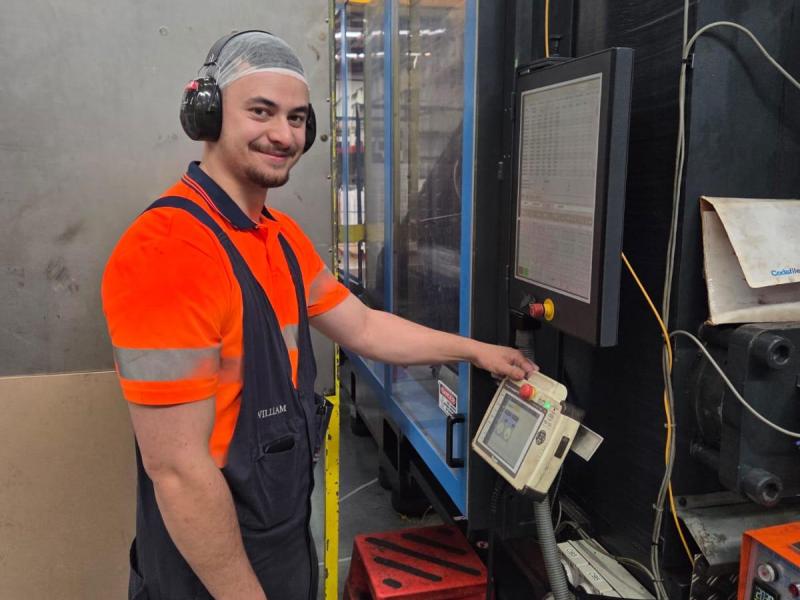
Meanwhile, plastics packaging manufacturer Convex says maintaining training investment during economic downturns has strengthened both productivity and resilience.
“A sound level of training gives staff the ability to maximise the setup and speeds which machines can be run at, and cross-training in certain areas gives us flexibility to move staff around as the work changes,” says Operations Manager Aaron Collett.
For Collett, workforce development is less discretionary spending and more business insurance.
“Like any manufacturing business, you can’t be doing what you did yesterday. Having the continuous improvement notion and attitude ingrained in a business is gold. You train to future proof.”
Creating a culture of support
Martin adds that one of the biggest differences at Excel is the business allows him to slow down and properly teach.
“Other companies would just explain something over the phone and send you on your way. Here, I can actually drive to site, stand beside someone and work through it with them.”
Martin says apprentices can quickly disengage when support is lacking.
“People lose interest fast if no one is helping them understand. If someone’s willing to learn, I’ll always make time for them.”
That philosophy helped earn Martin national recognition last year as a Competenz Most Valuable Coach.
For Competenz, coaches like Martin demonstrate why workplace support matters. Successful apprenticeships depend not only on learners, but on experienced people willing to teach, mentor and invest in others.
To strengthen that support, Competenz increasingly provides coaches, supervisors and workplace trainers with access to train-the-trainer programmes, practical workshops, funding and access advice, and resources that help employers build stronger workplace cultures - giving mentors the tools to develop the next generation.
Martin says one of the biggest challenges can be helping apprentices break bad habits learnt elsewhere.
“It’s much easier to fix a broken machine than un-teach bad habits in a person,” Martin says.
Rather than criticising, he prefers to teach through comparison and collaboration.
“I’ll say, ‘You do it your way this time, then next time we’ll do it my way and compare the results. Usually they can see pretty quickly why there’s a better process.”
McPhie says Martin’s mentoring style has helped apprentices build confidence and stay engaged in the trade.
“He meets them at their level and actually teaches them,” she says.
“You can tell the apprentices gravitate towards him.”
Building stronger businesses
While economic pressures have caused some businesses to pull back on training nationwide, Martin believes underinvesting in people creates bigger problems later.
“The better trained someone is, the more efficient and profitable they become,” he says.
“If you stop training people properly, eventually that catches up with the business.”
McPhie says that’s why businesses need to think beyond immediate labour needs and focus on building capability for the long term.
“Training has always been a priority for us because people are the business,” she says.
Across sectors, the message from employers investing in apprenticeships is consistent: when businesses prioritise training, they don’t just build skills - they build stronger teams, stronger cultures and stronger businesses.