

Jo Verry is a Senior Key Account Manager at industry training organisation, Competenz
You lock up your warehouse at night, switch off the lights and press play on an autonomous drone. By morning, it has flown the aisles, scanned barcodes, completed stocktakes and delivered real-time inventory data before the first staff member arrives.
For some manufacturers, that future isn’t coming - it’s already here.
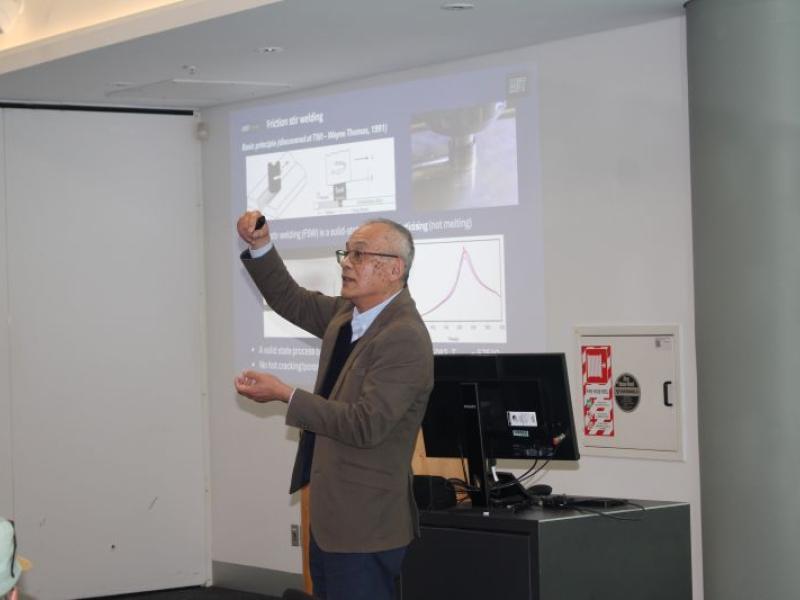
Having recently attended the MAKE NZ industry conference at the engineering and manufacturing show EMEX - alongside spending the past few months visiting manufacturing sites across New Zealand - I’ve had a front-row seat to how quickly technology is evolving. From collaborative robots (co-bots) on factory floors to increasingly sophisticated AI and automated systems in warehousing and distribution, one message came through consistently: the biggest shift isn’t machines replacing people. It’s that the people alongside those machines now need different skills.
There is still a persistent narrative that technology equals job losses. But across manufacturing floors, warehouses and engineering workshops, the reality looks different. Across many manufacturing environments, technology is changing jobs faster than it is removing them.
Take robotic welding. A robot may handle repetitive work, but it still needs someone who understands welding quality, tolerances, and outcomes. Visit a distribution centre, and you’ll see technology moving stock, but humans still analysing outputs, monitoring systems and solving problems when things go wrong.
Are the robots ready to fly solo?
Recently, I visited a manufacturer trialling a machine designed to automatically pick up boxes, stack pallets and shrink-wrap them. Impressive? Absolutely. Faster than the person standing next to it? Not even close.
The lesson is simple: technology still needs people.
Technology is not a procurement decision - it’s a workforce project
The strongest manufacturing investments happen when conversations about technology and workforce capability start early.
If new technology, robotics or AI-enabled systems are on your roadmap, ask now: who will operate it? Who will maintain it? Who will monitor outputs and manage exceptions? What new skills will supervisors need?
This is where workforce planning becomes more valuable than talking about training alone.
Bringing workforce partners into technology planning conversations before equipment arrives creates opportunities to build capability early - whether that is through structured on-the-job learning, targeted microcredentials or broader workforce development.
When done well, technology and workforce investment should happen side by side.
Adaptability is becoming manufacturing’s newest superpower
Manufacturing has always evolved. What is changing is the speed.
Export customers increasingly expect more data, more traceability and greater visibility across supply chains. In some cases, modern production systems are becoming less of a competitive advantage and more of a requirement to stay in the game.
That means the workforce needs to evolve too.
One concept gaining attention is reverse mentoring, where younger workers support experienced teams with digital capability while learning operational expertise in return.
We know skills are becoming more transferable too. The capabilities needed to oversee modern production systems, interpret data, troubleshoot systems, and lead teams are no longer confined to a single sector. They move across manufacturing, engineering, logistics and beyond.
For people leaders, this creates both a challenge and an opportunity. People are more likely to stay where they can see a future for themselves. Building clear development pathways around emerging technology isn’t just about capability - it’s increasingly about retention.
The first rung on the career ladder is changing
Perhaps the biggest shift is happening right at the workforce entry point.
Historically, many workers entered manufacturing through repetitive, manual or production-line roles. But what happens when technology increasingly absorbs those tasks?
The first job may no longer be loading boxes or manually checking inventory. It could involve monitoring systems, quality assurance, interpreting machine data or overseeing AI-enabled systems.
That raises a bigger question: are we preparing young people for those jobs?
This creates a genuine opportunity for industry, schools and workforce partners to rethink what work-ready means. Last month’s Budget announcements allocated $15 million for Industry Skills Boards (ISBs) to develop at least eight new industry-led secondary school subjects - creating one of the biggest opportunities in years to better align what students learn with what employers actually need.
Importantly, these new subjects won’t be developed in isolation. The Manufacturing and Engineering ISB will work alongside employers, educators and schools to help shape pathways that reflect real workforce demand - ensuring young people are developing capabilities that match the jobs, technologies and workplaces they are likely to enter.
We need stronger digital capability, systems thinking, problem-solving skills and transferable capability that moves across sectors. Because tomorrow’s workforce may need to understand AI-enabled systems, data and quality processes before they ever step onto the factory floor.
Now the challenge - and opportunity - is making sure those new pathways reflect where manufacturing is heading, not where it has been.
Workforce planning matters at every size
Technology-driven change is already reshaping manufacturing. The businesses that thrive won’t necessarily be those with the newest or biggest technology investments - they’ll be the ones planning their workforce around the changes ahead.
For large manufacturers, that may mean significant investment in new systems. For smaller businesses, it may simply mean asking different questions earlier, building capability gradually and preparing people for what comes next.
Because the future of manufacturing won’t be built by technology alone. It will be built by people who know how to work alongside it.