
Factories have never been better instrumented. Sensors track vibration, temperature, torque and cycle time on nearly every asset, yet automation on the plant floor keeps falling short of its promise. Research indicates manufacturers put to work less than 5% of the data their plants generate. The usual diagnosis is a data problem. A more accurate one is a context problem, and it helps explain why so many robotics and automation investments stall before they scale.
The Missing Dimension
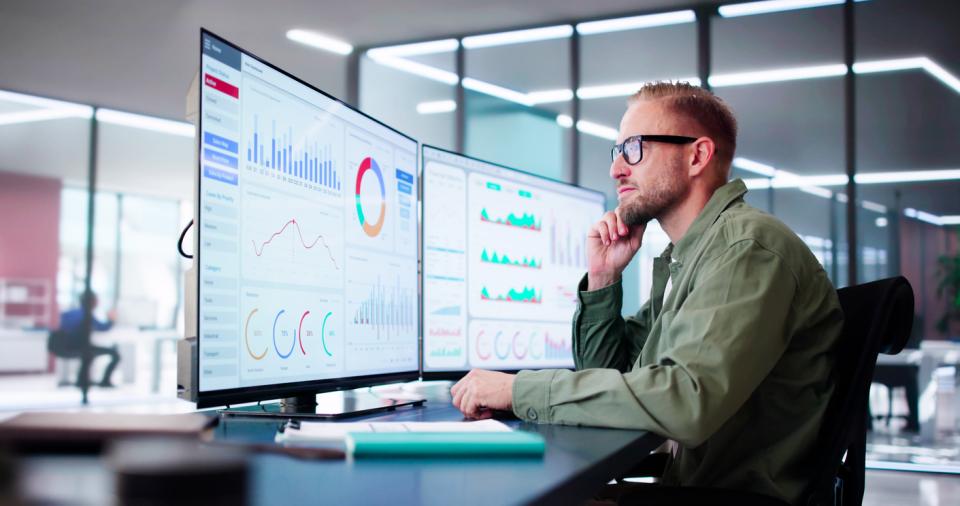
A vibration reading means little on its own, and it becomes useful only when paired with which machine produced it, which axis is affected, and what the anomaly will do to stations downstream over the next thirty seconds. Dashboards present numbers in rows and charts, but a plant is a physical system where position, motion and timing determine outcomes. Without a live model of that space, data stays descriptive as it reports what happened instead of predicting what comes next. That limit matters more as plants add robots and autonomous equipment, because machines that move through shared space need to know where everything else is, not just how it is performing.
The consequences show up in the pipeline, especially as IDC research found that for every 33 AI proofs of concept a company launches, only four reach production, with weak readiness in data, processes and infrastructure named as the cause. Many pilots succeed in a controlled demonstration and then falter on a real floor, where robots, people, conveyors and materials constantly move and interact.
From Reporting Data to Modeling Space
Spatial AI addresses this issue by building a continuously updated 3D representation of the factory floor and anchoring every signal to a location and a relationship. Instead of a threshold alarm on a single motor, the system understands that the motor feeds a specific conveyor, that the conveyor supplies a robotic cell, and that a slowdown will starve a packaging line in under a minute.
Practical examples show this adjustment. A maintenance alert that once read "bearing temperature high" can become a prediction that this bearing will degrade a cell two stations ahead, paired with a recommendation to reroute work now. Mobile robots can navigate a changing layout using a shared live map instead of fixed routes. Quality teams can trace a defect to the exact position and conditions in which it was produced. In each case, a prediction becomes an action without waiting for a person to reconcile three screens.
This also reframes investment priorities because when adding sensors or dashboards, plant workers increase volume without increasing understanding. The next decade of industrial competitiveness is more likely to favor plants that model space well than plants that simply collect more.
The Workforce Question Few Are Asking
However, technology alone does not close the gap, therefore workforce development is in higher focus. The Manufacturing Institute and Deloitte project that manufacturers could need as many as 3.8 million additional employees between 2024 and 2033, with as many as 1.9 million of those jobs potentially going unfilled. The same analysis found a 75% increase in demand for simulation skills over five years, mostly in technology enabled production and testing roles.
Because of this changing dynamic, the roles are now changing. On a floor guided by spatial models, a technician’s value lies less in operating a single machine and more in interpreting a system: reading what a live model predicts, judging when to trust it, and deciding when to override it. These systems interpreters need fluency in data, physical processes and human judgment at once. Most reskilling programs still train for equipment specific tasks, and many were designed before this shift began. Apprenticeships and on the job practice with live digital models, rather than classroom instruction alone, give workers a way to build that judgment. Employers that treat training as part of the deployment plan, not an afterthought, are likelier to see pilots survive contact with the floor.
Two Tracks, One Race
The industrial race is being run on two tracks at once. One is infrastructure: the sensing, connectivity and spatial models that give a plant a shared, live understanding of itself. The other is labor: the people able to interpret that understanding and act on it. Progress on only one track produces predictable results. Advanced systems with no one prepared to use them stall in pilots, while a skilled workforce limited by fragmented data cannot move beyond reactive work.
Leaders weighing next steps can start with a few questions: Which floor decisions currently depend on someone mentally connecting several data sources? Which of those carry the highest cost when delayed? Which roles will need to change first to support them? Starting with a narrow, high value use case, and training the people who will own it in parallel, tends to produce evidence that scales, and it gives skeptical stakeholders something concrete to evaluate instead of another roadmap.
Whichever manufacturers build both tracks first will set more than the pace of automation. They will shape the terms of competition, from how quickly a line recovers from disruption to which plants attract the talent needed to run them. The question for the industry is shifting from how much data a factory can collect to how well it understands the space it operates in.
About The Author: Dijam Panigrahi is Co-founder and COO of GridRaster, a spatial computing platform for industrial enterprises and manufacturers. For more information visit www.gridraster.com.