
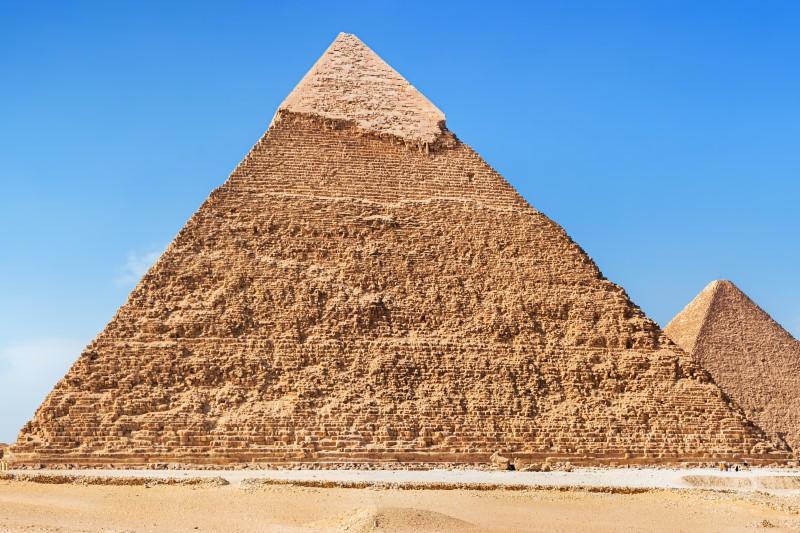
The Great Pyramid of Giza took 20 years to build, using about 2.3 million blocks, most weighing between 1.8-27 tonnes, some over 45 tonnes. They were manhandled into place by up to 100,000 workers, although current speculation says it was around 20,000 labourers, the majority, it is now believed, skilled and paid workers, not slaves.
The generally accepted algorithm for project completion is placing 1.1 blocks every two minutes, over 365 days, if block-laying were continuous for 10 hours per day. The precision has been described as inexplicable, which has fueled talk of supernatural or extra-terrestrial help.
The building was 280 Egyptian royal cubits tall - 146 metres - and the tallest building in the known world for 3871 years until Lincoln Cathedral’s heaven-grazing 160 metres rose in 1311.
At completion it would have been 100 percent accurate to true north - the most accurately aligned of any structure in the world - but the North Pole has shifted over the past millennium, so it is
now slightly off point.
Finally, it is estimated that building a replica today would take five years and USD 5-15 billion, depending whether things such as labour laws are included or not included in the sum.
Egypt’s current attempt at an engineering marvel is The Toshka New Valley project, to develop agricultural production and create new jobs by creating a second Nile Valley. Finish date was 2017, but they are now looking at 2020.
The project currently has equal amounts of admiration and derision.