
Over $500m will be invested in expanding the South Island’s food, manufacturing and construction supply chain infrastructure over the next five years.
The investment in Christchurch’s Hornby Quadrant comes as the precinct is integrated into a new $5.5 billion, 860-hectare regional manufacturing and export logistics network designed to connect Canterbury with the country’s largest inland port and the largest industrial development, which are planned for Otago and Southland.
The move is set to create hundreds of new jobs and comes as Christchurch faces a commercial land shortage, which has seen prices double to almost $500 per square metre over the past five years - a trend experts say will constrain future large-scale investment in the region.
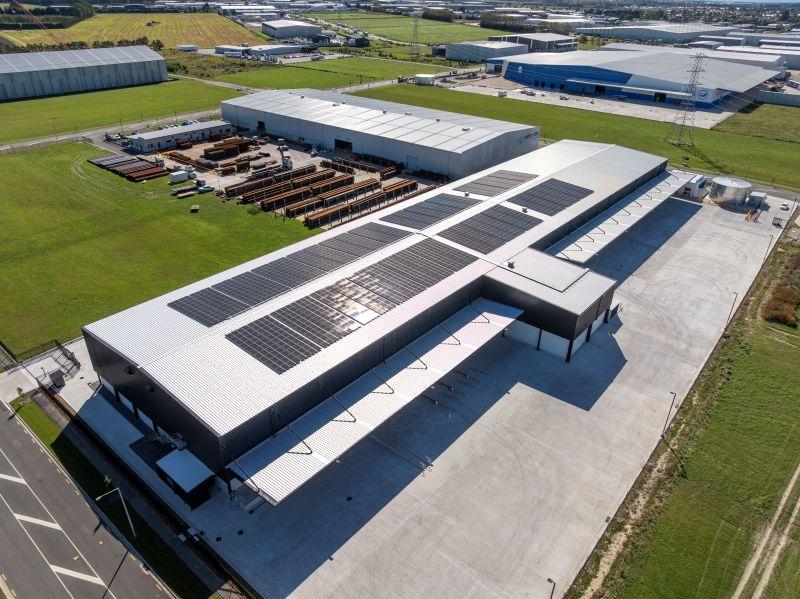
With over 150 hectares of industrial land, Hornby Quadrant is one of the largest industrial business parks in New Zealand. Despite only half of the precinct being built out, the development acts as a distribution hub for a significant proportion of the South Island’s consumer food products and building materials.
A newly created 30-hectare fourth stage of the development will see national property and construction firm Calder Stewart support Mainland Group (formerly part of Fonterra’s consumer brands business), United Steel and other large-scale operators in establishing manufacturing and distribution facilities to expand the region's supply chain. The fourth stage of Hornby Quadrant will have a completed value of over half a billion dollars once fully developed.
The entire precinct will be valued at over $3 billion once complete and is already home to major FMCG and distribution firms including; Foodstuffs South Island’s distribution centre, six Fletcher Building subsidiaries, Sleepyhead, Penske, OJI Fibre Solutions, My Food Bag and Dairyworks, which distributes around 80% of the country’s cheese through its chilled warehouse.
Once fully developed, Hornby Quadrant is expected to employ thousands of people across various industries with the potential to generate 70MW of renewable energy via rooftop solar, enough to power 9,350 homes.
Ben Stewart, Calder Stewart’s director of property, says that despite Canterbury’s seemingly abundant land, much of it is unzoned, lacks essential infrastructure, or is too far from key transport links, making it unsuitable for large-scale development.
He says the growing use of automated warehousing technologies is creating a trend toward greater consolidation among industrial operators which allows businesses to centralise operations, reduce overhead costs and improve supply chain efficiency by leveraging larger, more advanced facilities.
“We know that rapid advancements in automated search and retrieval technologies are incentivising companies to look for locations that can support the establishment of much larger and intensified operations.
“At the same time, Christchurch is facing a land supply constraint similar to Auckland. While we have the ability to expand westward, much of the available land is not zoned.