

PULTRUSION is a continuous process for manufacturing composite structural profiles – such as rod, tube, angle, channel, bar, or in more complex shapes.
Reinforcing filaments are impregnated with resin immediately before being pulled through a heated die (as opposed to the extrusion process which uses the ‘push’ concept). The resin cures and bonds the filaments together while progressing through the heated die, which determines the shape of the profile. The product is then cut to length.
The properties of the resin and reinforcements used can be varied to suit specific strength requirements – and pultrusions will out-perform many conventional structural materials.
Gisborne-based Pultron Composites is one of the largest pultrusion specialist companies in Australasia, and technical sales manager Pete Renshaw reports that there is a growing, and indeed evolving, market for his company’s products.
“The business began by manufacturing electric fence posts for the New Zealand agricultural sector around 25 years ago. We then expanded into sail battens for yachts, and rails for electricians ladders. Because of this background we have typically become a supplier of composite components over the years, and it has been what we’ve done best. For example, composite springs for a flat panel monitor stand – perhaps only worth a matter of cents each, but supplied in the millions.”
However, in more recent times, Renshaw says they have identified potential markets for pultrusions in other areas and on a larger scale.
“We’re now developing specialised profiles for the construction industry – composite pultrusions are ideal for the likes of walkways, handrails, structural sections on buildings – in fact items that typically may have been made from steel or aluminium and are prone to corrosion.”
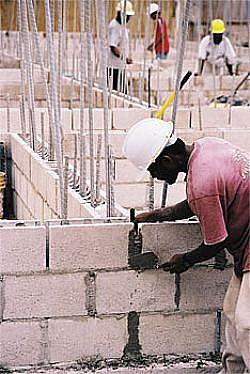
Renshaw says fibreglass reinforcing rods for concrete construction have quickly become a core line for Pultron Composites; the rods are ideally suited for areas where corrosion of traditional mild steel rebars is an issue.
“The Marshall Islands provide a good example of this application. The islands are about two metres above sea-level at their highest. Salt-laden coral is mined for the concrete, which, as you’d expect, quickly corrodes any steel reinforcing. Our high-performance pultruded rebars have solved the problem.”
Other applications for pultrusions cover the mining, petroleum, water supply and sewage treatment, marine, horticultural and agricultural industries. The excellent insulation properties make them ideal for electrical applications. As the central strength member in optic fibre cable, fine pultruded rod is continuously coiled in lengths of more than 25 kilometres and widely used in communications.
Pultron Composites has an R&D team and engineering design capability to assist in all technical aspects of pultrusions. The company is constantly developing new products and processes and has earned a reputation for technical innovation over the years.
Pultrusions ideal for structural applications
General
Monday, 10 September 2007
Related Articles

Wednesday, 23 September 2026
After 219 nominations uncovered some of New Zealand’s best workplace coaches last year, industry training organisation Competenz is kicking off another season of its Most Valuable Coach (MVC)...
Wednesday, 23 September 2026
Australian engineers have created a strong and lightweight titanium material that floats in water, even after severe damage, revealing a promising new material for marine infrastructure.
Research...

Wednesday, 23 September 2026
A new Kiwi-developed pavement and geotechnical verification records software is turning geotechnical reports into structured evidence for roading and infrastructure teams.
Led by Hamilton-based...