
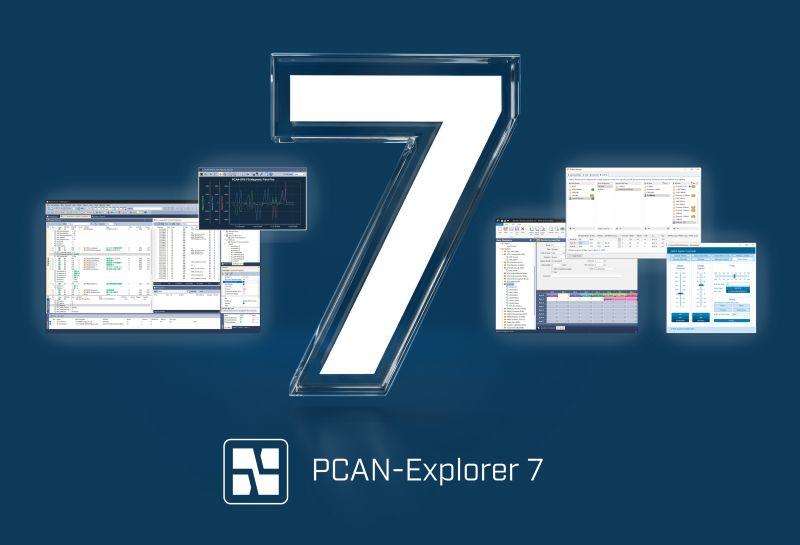
The next major evolution of PEAK´s professional CAN communication software for analysing, monitoring, and simulating CAN, CAN FD, and CAN XL networks contains many helpful features for engineers. PCAN-Explorer 7 marks a significant step forward, adding full CAN XL support for faster bit rates (up to 20 Mbit/s) and higher payload (2,048 Bytes). Users can now assign multiple description data bases per connection such as symbol files or CANdb files, which makes it easier to work with several data bases in parallel avoiding manual merging effort. The addition of Python scripting brings a modern automation environment to the platform heavily used in automotive testing applications.
Another major improvement is the introduction of a new licensing system based on CodeMeter. Customers can choose between single user or floating licenses. In addition, USB license dongles are available to make single user licenses portable. For users who want to test the software, trial licenses are available. These options make the Explorer software more flexible for both individuals and teams.
PCAN-Explorer 7: New features, that convince
Another helpful functionality is the fine-grade trace playback, allowing users to step through trace files message by message, pause automatically on defined breakpoints, and create highly controlled test and replay scenarios. PCAN-Explorer 7 also introduces support for J1939 FD, enabling engineers who work with heavy-duty and off-highway applications to analyse and simulate next-generation protocol variants. Another practical enhancement is the highlighting of data changes in the receive list. This makes it easier to spot dynamic values, detect anomalies, and follow changing signals in real
PCAN-Explorer: The standard CAN software
PCAN-Explorer has long been known as a powerful and versatile Windows software tool for working with CAN and CAN FD networks. Its core functionality is built around simultaneous access to multiple CAN channels, which allows users to observe, analyse, and log communication in complex network environments. A central element is the symbolic representation of messages, which transforms raw CAN data into readable and meaningful signal information using symbol files. In everyday use, PCAN-Explorer enables both manual and periodic transmission of messages, making it ideal for testing, network trouble shooting and system development.
The new Features at a Glance Support for CAN XL Support for J1939 FD Multiple symbol files per connection Python scripting support Fine-grade trace playback with step control, break points, and playback areas Highlighting of data changes in the receive list Improved performance with 64-bit foundation and separate UI and communication engines Flexible license options: Single, Floating, Trial, Add-Ins with license dongle option Optional maintenance contracts for updates and support All proven PCAN-Explorer 6 core functions included
Get more information on our website: www.peak-system.com/explorer7