
As robots get smarter, medical tools get smaller and electric vehicles (EVs) get faster, one trend connects them all: precision miniaturisation. From surgical robots to compact drivetrains and wearable diagnostics, the push for smaller, more efficient systems is reshaping how engineers think about mechanical components. Here, Chris Johnson, managing director at SMB Bearings, reveals how high-performance miniature bearings are driving innovation in robotics, MedTech and EVs — and why their role in system reliability is more critical than ever.
Anyone familiar with the butterfly effect — the idea that a minuscule disturbance can spiral into a much larger outcome — knows how surprisingly fragile complex systems can be. Supply chains are no different. In engineering, it’s often said that a chain is only as strong as its weakest link, and nowhere is this truer than in the supply networks that feed high-tech manufacturing. Even a tiny, low-cost component can trigger significant disruption when its availability falters.
According to a 2024 report from the University of Cambridge’s Institute for Manufacturing (IfM), global efforts to map supply-chain resilience for “critical minerals” — the building blocks of many advanced steels, ceramics and high-performance alloys — show that even modest upstream disruptions can jeopardise material availability across industries such as automotive, medical devices and advanced manufacturing.
The report highlights how mineral supply chains are particularly vulnerable due to the concentration of processing in a small number of regions, exposure to bottlenecks and the limited availability of recycled or substitute materials.
For manufacturers of miniature bearings — which often rely on these same high-specification steels and ceramic materials — the lesson is clear: securing stable supply routes, maintaining appropriate inventory levels and partnering with suppliers that have robust, well-diversified material access is essential.
Miniature bearings fall squarely into this risk profile. Though physically small, their manufacturing depends on tightly controlled raw materials, specialist heat treatment and precision finishing. As a result, volatility in material supply or global logistics can have disproportionate effects on production schedules and maintenance planning, particularly in long-lifecycle or mission-critical applications.
Enablers of innovation
As devices like surgical robotics, EV drivetrains, satellite systems and next-generation medical instruments continue to shrink in size and become more complex, miniature bearings have become one of the most strategically important components in modern precision engineering.
Once treated as commodity items, miniature bearings are now key enablers of innovation — offering the speed, reliability and durability that advanced systems demand. Engineers are turning to high-performance materials, such as AISI 440C stainless steel for corrosion resistance, ceramic hybrid bearings for ultra-high-speed operation and specialist lubricants to meet biocompatibility or vacuum-environment requirements.
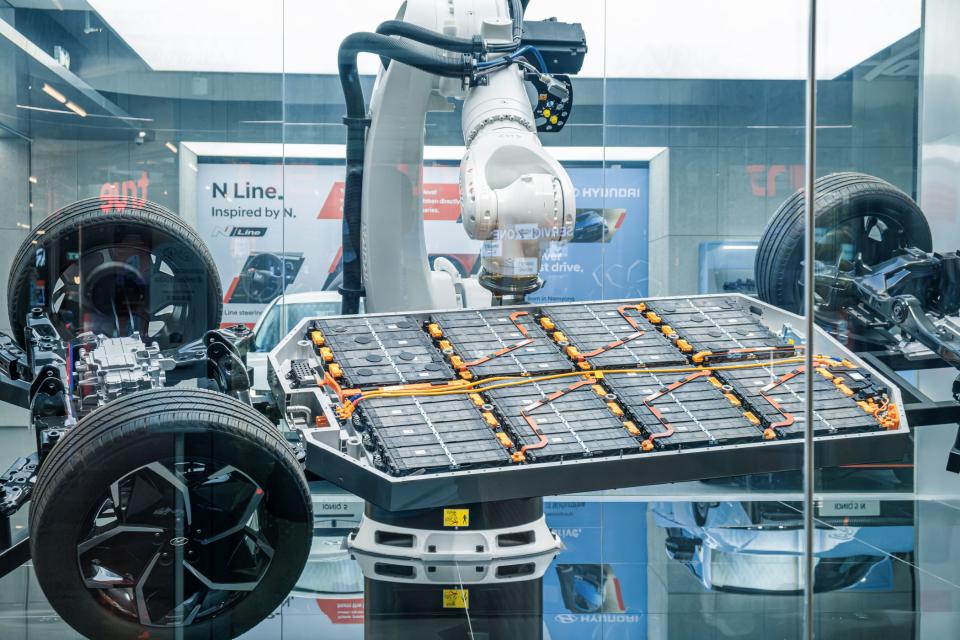
Miniature bearings also play a central role in enabling more compact, high-torque assemblies. In EVs, for example, high-speed electric motors and gear reduction units increasingly rely on miniature deep-groove ball bearings to reduce friction and maintain performance under challenging thermal and load conditions. In surgical robots, miniature bearings must remain exceptionally smooth and quiet while offering repeatable, maintenance-free performance in tight spaces.
Specialist supply makes a difference
Both design engineers and procurement teams are recognising that sourcing from general distributors is no longer enough. With performance parameters becoming more stringent — and failure tolerances tighter than ever — selecting the right material, clearance, cage type and lubrication can make or break a design.
That’s why we’re seeing a shift toward application-led bearing selection, where early collaboration with a specialist supplier ensures the bearing configuration is not just suitable but optimised for the product’s full operating life. At SMB Bearings, for example, we regularly work with engineers to specify custom bearing solutions — whether it’s a non-standard shield for sterilisation compatibility, a special radial play for low-speed torque control or ceramic balls for magnetic-field resistance.
Big gains from small components
The world of miniature bearings is evolving — not just in terms of where these components are used, but how they’re valued. In today’s innovation landscape, bearings are no longer an afterthought. They are a strategic lever for performance, reliability and even market differentiation.
For design teams working on the cutting edge — from high-speed lab automation to aerospace actuation systems — the tiniest components can unlock the biggest engineering advances.