
Food safety specialist Fortress Technology explains how product effect can interfere with detection signals and reduce sensitivity in dairy applications.
Water, like metal, is conductive. Meaning that dairy products such as blocks of cheese compared to grated, sliced or soft cheese, can react in different ways in the magnetic field of a food metal detector. This product effect may result in the product being rejected and good food being wasted.
To identify a metal contaminant within conductive products, a metal detector must address product effect. Reducing the aperture size in relation to the product size can be a simple way to increase metal detector sensitivity and reduce this margin of error. Features like single pass product learning and automatic calibration can also help.
However, with single frequency metal detectors running ‘wet’ products there is often a trade-off between ferrous and stainless-steel performance depending on the selected frequency. Typically, higher frequencies exhibit increased performance in detecting stainless-steel versus ferrous metals. The best approach is to find a frequency that balances the lowest product effect with detection of target contaminants.
Fortress Technology Interceptor software algorithms can adapt to these changing characteristics by distinguishing between indicators specific to the product and those that flag anomalies. This ensures genuine contamination from metal is not masked by product effect. AutoPhase is another useful tool from Fortress Technology that can help to counteract product effect. For larger cheese blocks weighing up to 20kg, high product effect along with the product size adds another challenge as product signature constantly shifts when a single block moves through a metal detector aperture. M-phase is an algorithm developed specifically for this unique effect.
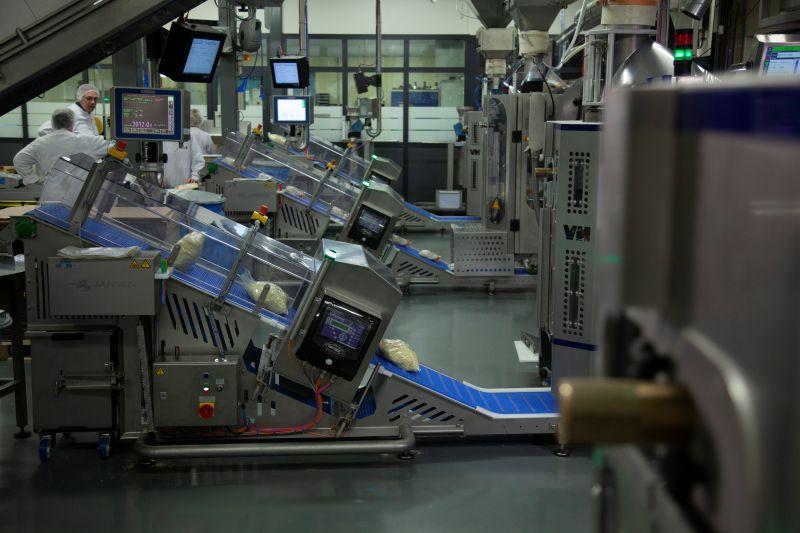
Vepo Cheese installed seven identical incline Interceptor metal detectors to overcome product effect on their grated cheese lines, all equipped with data reporting to enhance traceability.